What the law actually requires
Dutch legislation is surprisingly open on one point: nowhere does the Arbowet, the Working Conditions Act, specify a fixed number of BHV officers a company must have. Article 15 simply states that employers must arrange "sufficient" qualified emergency response staff, matched to the size of the organisation, the risks identified in the mandatory risk assessment (RI&E), and the layout of the building. There is no set formula, but there is no free pass either: a company needs to be able to show that this has actually been thought through.
That starts with the RI&E. Without an up to date risk assessment, there is no basis for deciding what "sufficient" means for a given situation. This is also the single most common gap: companies arrange a first aid kit and train a couple of staff members, but never document why that number fits their actual risks.
How many BHV officers you need
In practice, most occupational health services and industry bodies work from a rule of thumb: one BHV officer per fifty people present. That is not a legal requirement, but it is a workable starting point that most risk assessments land on anyway.
When determining your own number, factor in:
Shift work and evening or night operations, since every shift needs its own coverage
Holidays, illness and staff turnover, so plan at least one backup per officer
Multiple floors or buildings, where coverage per floor responds faster
Visitors and non-permanent staff, who count toward the total as well
A company of forty people spread across three floors realistically needs more than a single officer, even if the headcount sits below the rule-of-thumb threshold.
Which supplies need to be in place
The law asks for "sufficient materials and resources" without listing them exhaustively. In practice, that means:
A first aid kit, complete and kept in a fixed, well known location
Evacuation signage and emergency lighting, so everyone can find their way during a power cut or smoke
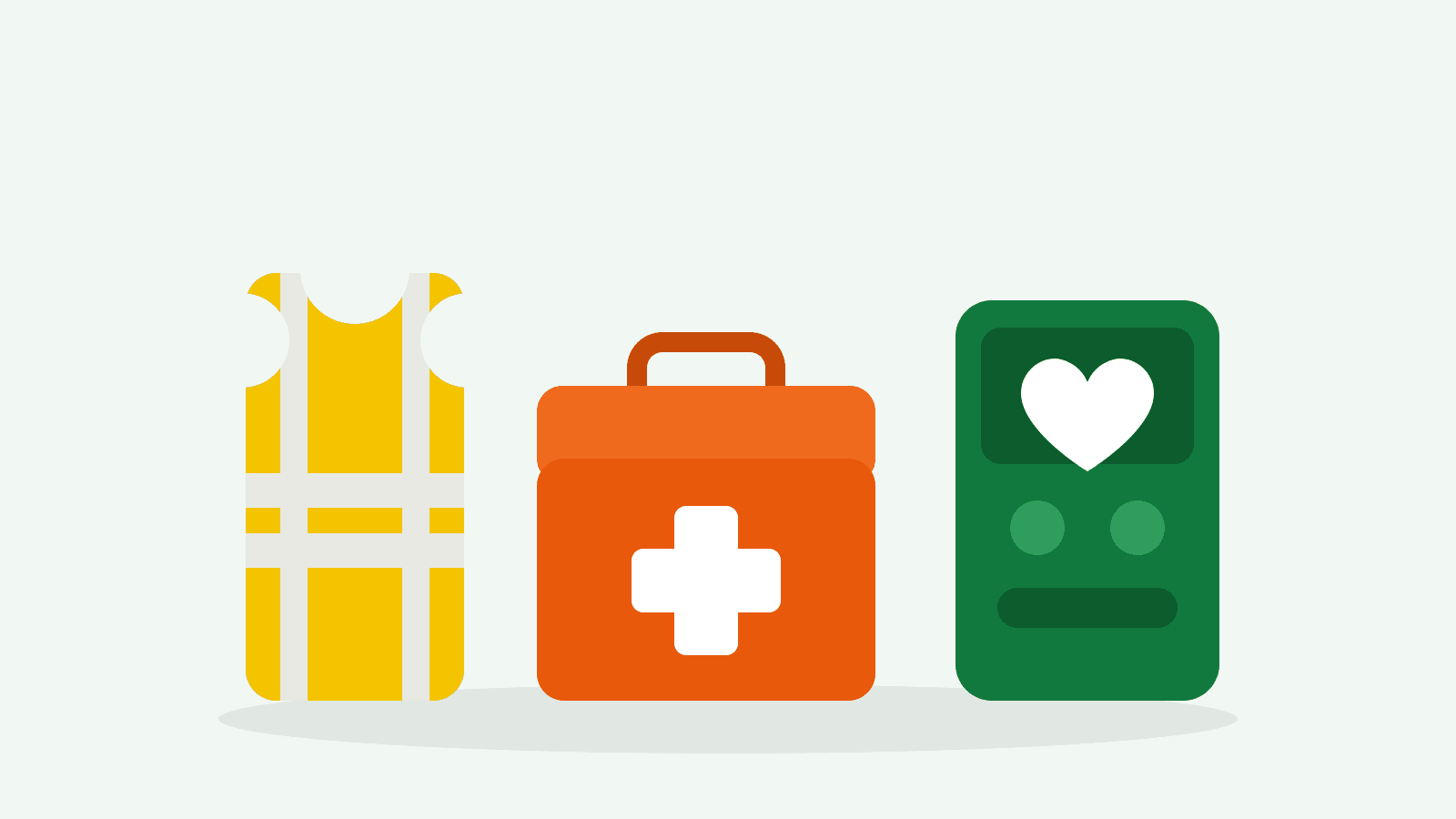
Recognisable BHV vests, so responders are instantly visible during an incident
Fire extinguishing equipment suited to the risks in the building
An AED, incidentally, is not a legal requirement. Many employers install one anyway, simply because the odds of a successful resuscitation improve considerably when a defibrillator is close at hand.
Tasks during an evacuation
An evacuation runs on clear role division. The core tasks BHV officers need to cover:
1. Raise the alarm: report the incident and notify emergency services and colleagues
2. Guide people out: direct everyone to the assembly point via the correct escape route
3. Check the building: confirm headcount and sweep rooms for anyone left behind
4. Provide first aid until professional help arrives
5. Hand over: brief emergency services on arrival
Write down who covers which task, and rehearse the scenario for real: a task list on paper means little until someone has actually had to run it.
Common mistakes
The most frequent slip-ups are rarely dramatic, but they are persistent:
Certificates that lapse without anyone noticing
No backup coverage while the regular officer is on leave or off sick
A first aid kit that never gets checked or restocked
Colleagues who have no idea who the BHV officer actually is
An evacuation plan that has never been rehearsed
Each one is solvable with a few clear agreements and a fixed check routine.
Arranged properly, nothing to worry about
Getting BHV in order sounds more complicated than it is. Once the risk assessment, officer numbers and supplies line up, there is little left to think about until the next review. At De Groene Koffer you'll find everything needed to get there: complete first aid kits, AEDs, evacuation signage and BHV vests, so a business can tick off what the law asks for in one go.